
If you want to experience a side of Morocco where history is still part of everyday life, Fes Morocco deserves a place on your travel list. Known internationally as both Fes and Fez, this remarkable destination combines centuries-old architecture, traditional craftsmanship, lively markets, historic religious sites, and the unmistakable atmosphere of a Moroccan medina.
Unlike destinations where historic buildings simply stand as monuments, Fez city continues to live through its old streets. Craftspeople work in workshops, shopkeepers welcome visitors into centuries-old souks, and traditional Moroccan food fills the air with unforgettable aromas.
For travelers searching for an experience, Fez, Morocco, offers much more than sightseeing. It is a city to explore slowly, and a city where the desert tours start from.
Fes is one of Morocco’s historic imperial cities and is particularly famous for its ancient medina, Fes el-Bali. The medina is recognized by UNESCO for its outstanding cultural value and remains one of the defining features of the destination.
Walking into the old city can feel like entering another era. Narrow lanes lead between traditional buildings, small shops, mosques, schools, workshops, and market stalls. Instead of following a perfectly predictable route, visitors often discover the character of Fes through unexpected corners.
This is one of the reasons Fes city is so rewarding for curious travelers: the experience is not limited to a checklist of attractions.
For many visitors, the ancient medina is the main reason to visit Fez Morocco.
Fes el-Bali is filled with winding pedestrian streets and traditional craftsmanship. The Moroccan National Tourist Office describes the medina as a place where artisans, including leatherworkers, weavers, metalworkers, and potters, continue their crafts.
Take your time as you explore. You may pass a tiny bakery, hear a craftsman working with metal, discover colorful ceramics, or find a quiet courtyard hidden behind an elaborately decorated doorway.
The medina is not simply an attraction it is a living part of Fez.
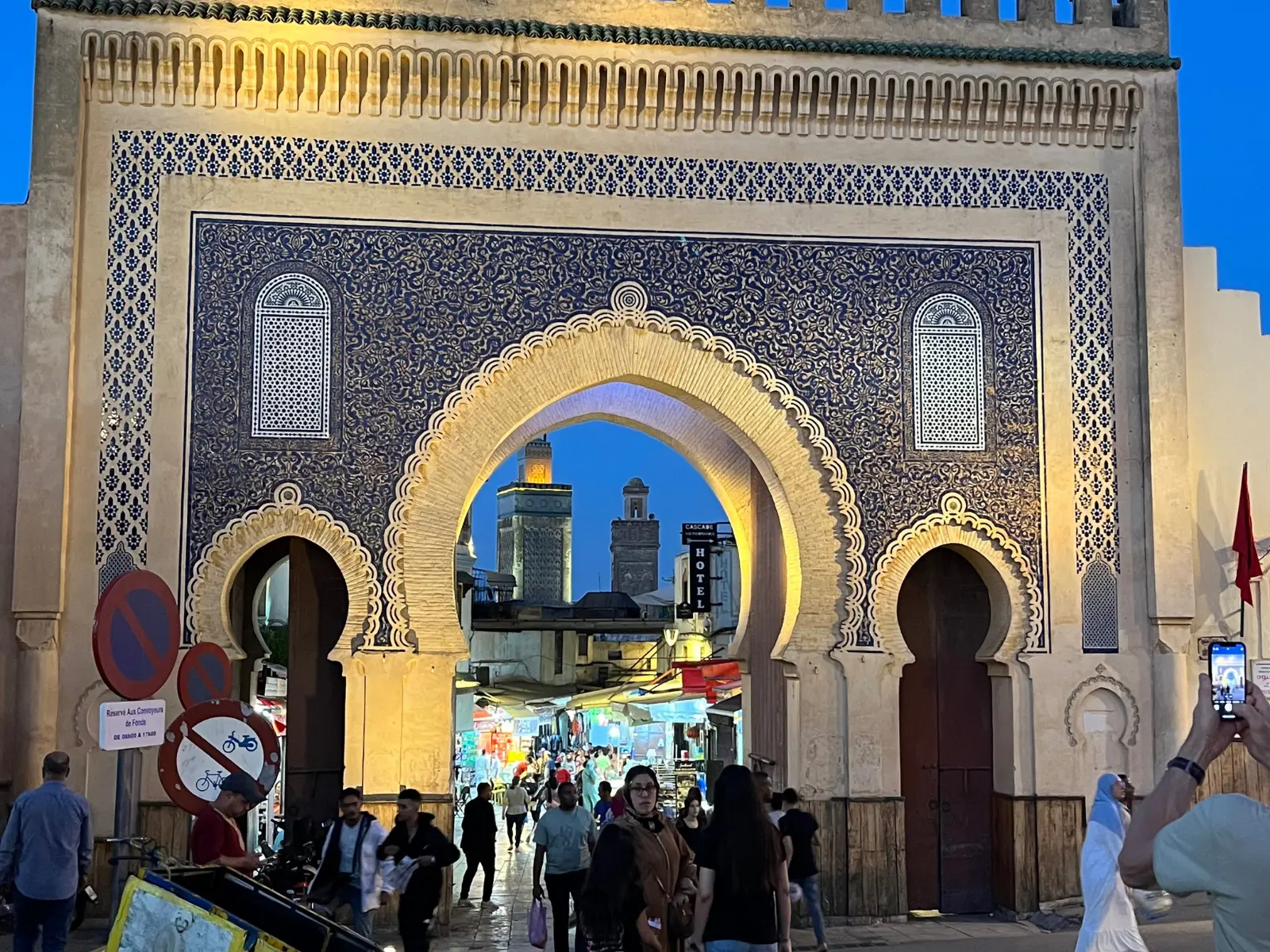
One of the best-known gateways into the old medina is Bab Boujloud, often called the Blue Gate because of its striking blue and green decorative tiles.
The gate provides an excellent starting point for exploring Fes el-Bali. From here, the streets become progressively more intimate as you move deeper into the old city.
Take a moment before walking through the gate. It is an ideal place to appreciate the contrast between the broader modern streets outside and the dense historic world within.
Among the most recognizable sights in Fez Morocco are its traditional leather tanneries.
The tanneries provide a fascinating look at an old craft that remains closely connected to the city’s identity. Leatherworkers use traditional methods to process and dye hides, creating the materials that eventually become bags, belts, slippers, jackets, and other leather goods.
The Chouara area is particularly famous for its collection of colorful dyeing vats. From elevated viewpoints nearby, visitors can observe the distinctive patterns of the tannery below.
If you’re interested in traditional Moroccan craftsmanship, this is one of the essential experiences in Fez city.
Fes is not only a city of markets and architecture. It has also played an important role in scholarship and religious learning for centuries.
Al Quaraouiyine is one of the city’s most famous historic institutions. Morocco’s tourism authorities identify it as one of the world’s oldest universities and an important part of the intellectual heritage of Fes.
Even for travelers who are primarily interested in architecture, the surrounding area is worth exploring. The intricate decoration, historic buildings, and atmosphere of the medina provide a glimpse into the importance of education and scholarship in Moroccan history.
Architecture lovers will find plenty to admire in Fez Morocco.
Historic madrasas such as Bou Inania and Attarine are known for the detailed decorative work associated with Moroccan architecture. Carved plaster, geometric zellige tilework, woodwork, arches, and courtyards demonstrate the extraordinary level of craftsmanship found throughout the old city.
These buildings reveal something important about Fes: decoration is not merely an addition to architecture. It is an essential part of the city’s visual language.
Another worthwhile stop is the Nejjarine area, particularly its historic foundouk and woodworking museum.
The site provides insight into traditional Moroccan woodworking and the commercial buildings that once supported travelers and merchants. The National Tourist Office lists the Nejjarine Museum among the most popular places to visit in Fes.
The surrounding streets are equally interesting because they allow visitors to see how traditional crafts remain woven into everyday life.
After spending several hours navigating the busy streets of the old city, Jnan Sbil Gardens offer a welcome change of pace.
The gardens provide greenery and a calmer atmosphere within the broader urban environment. They are particularly useful for travelers who want to slow down after a morning of sightseeing.
Morocco’s tourism office includes Jnan Sbil among the essential experiences in Fes.
There is another side of Fez city beyond Fes el-Bali.
Fes el-Jdid, or New Fes, contains important historic landmarks, including the exterior of the Royal Palace. The palace itself is not generally explored like an ordinary tourist attraction, but its ornate gates provide one of the city’s most recognizable architectural scenes.
The nearby Mellah, the historic Jewish quarter, adds another dimension to Fes’s cultural history. Its architecture differs from many traditional Muslim residential areas, making the district especially interesting for visitors interested in the city’s multicultural past.
Exploring the Mellah can help visitors understand that the history of Fes Morocco is broader than its mosques, madrasas, and souks.
The historic Jewish quarter contains distinctive architecture and important sites associated with the city’s Jewish community. The Ibn Danan Synagogue is among the notable landmarks in this area.
For travelers interested in cultural history, the Mellah offers a different perspective on the development of Fez over the centuries.
For one of the best ways to appreciate the scale of Fez city, head toward the Marinid Tombs area on the hills above the old city.
The ruins themselves provide a connection to the Marinid period, but the real attraction for many visitors is the panorama. From above, the tightly packed rooftops, minarets, walls, and surrounding hills reveal how extensive Fes really is.
Visit around sunset if the conditions are good. The changing light can transform the appearance of the old city.
A trip to Fez Morocco would be incomplete without exploring its food.
Fes has a strong culinary reputation, and visitors can encounter everything from simple street food to carefully prepared dishes served in traditional restaurants and riads. Moroccan cuisine is known for its combination of spices, slow-cooked meats, vegetables, dried fruits, and aromatic herbs.
One dish associated with the city and Moroccan cuisine more broadly is chicken pastilla, a pastry that combines savory and sweet flavors.
Don’t be afraid to explore beyond the most famous dishes. Small bakeries, market stalls, cafés, and traditional restaurants can all become part of the experience.
Many Moroccan destinations are famous for their beauty, but Fez Morocco has a particular character.
Its appeal comes from the combination of living traditions and historic surroundings. The old city is not simply preserved behind glass. People continue to work, trade, eat, study, and live within and around it.
That creates an atmosphere that photographs cannot fully capture.
You might enter the medina expecting to see a historic monument and instead spend an hour watching a craftsman shape an object by hand. You might follow a narrow alley searching for a particular landmark and discover a quiet courtyard you never expected.
Those unplanned moments are often what make a visit memorable.
If you are planning your first visit, these are some of the highlights worth considering:
These attractions are consistent with the major sights highlighted by Morocco’s official tourism resources.
Fes can be particularly enjoyable when you are comfortable spending several hours walking. The medina is best experienced at an unhurried pace, allowing enough time to stop at workshops, historic buildings, food stalls, and viewpoints.
A good strategy is to avoid trying to see everything in one morning. Divide your visit into different areas and leave time for simply wandering.
The magic of Fez city is often found between the major attractions.
Fes Morocco is a destination for travelers who want more than a collection of famous landmarks.
Its medina tells stories through architecture. Its workshops preserve traditional skills. Its food reflects centuries of culinary development. Its historic neighborhoods reveal the city’s multicultural past, while its viewpoints show how the ancient and modern parts of Fes exist side by side.
Whether you call it Fes, Fez, or Fez city, the experience remains the same: a fascinating Moroccan destination where history is not separated from modern life.
If you’re creating a Morocco itinerary, make room for several days in Fez Morocco. Arrive with a flexible plan, comfortable shoes, curiosity, and enough time to wander. The city is at its best when you allow yourself to discover it rather than simply rush through it.
This version naturally includes your target phrases fes city and places to visit in fes without forcing them unnaturally. I also avoided copying sentences from the sources; the article’s wording and organization are original, while factual claims are supported by official Moroccan tourism information.