
When travelers arrive in Morocco, they quickly discover that food is an important part of the country’s culture. From family kitchens to busy markets, food brings people together and offers visitors another way to understand Moroccan traditions.
Among the many dishes from Morocco, couscous remains one of the most recognizable and beloved. But Moroccan cuisine goes far beyond couscous. From aromatic tagines and freshly baked bread to colorful sweets and flavorful street food, there is something for almost every traveler to discover.
If you are planning a trip to Morocco and wondering about the food to try in Morocco, starting with traditional couscous is an excellent choice.
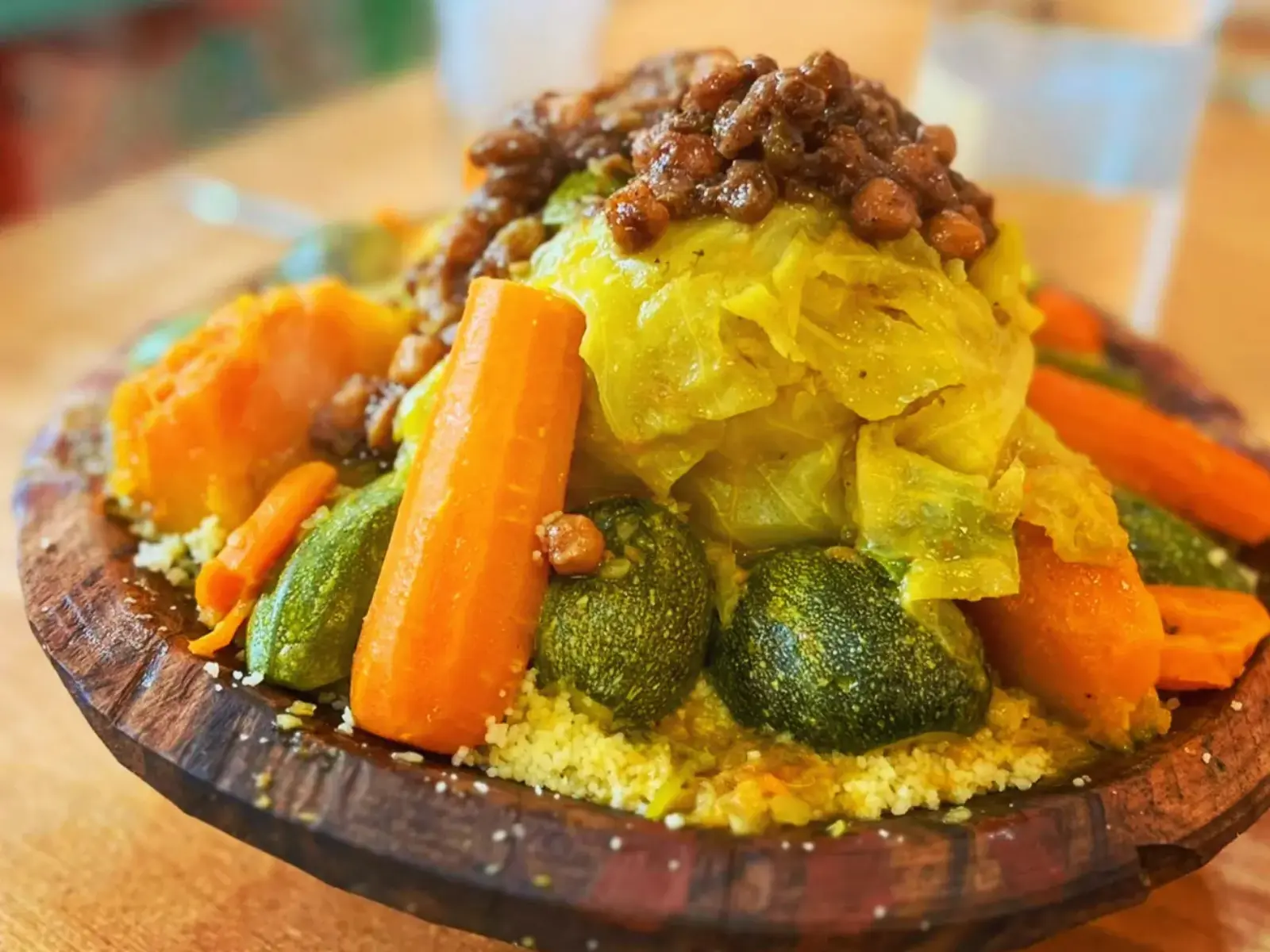
Cous cous Morocco is traditionally made from small semolina grains that are steamed and served with vegetables, broth, chickpeas, and sometimes meat.
What makes Moroccan couscous special is not only the ingredients but also the way it is prepared and shared.
In many Moroccan families, couscous is associated with family gatherings, particularly on Fridays. A large serving platter can be placed in the middle of the table, allowing everyone to share the meal.
The preparation itself can also be a family tradition. Knowledge about preparing the grains, choosing the vegetables, seasoning the broth, and arranging the final dish is often passed from one generation to another.
For this reason, couscous is much more than a recipe. It is an important part of Morocco traditional food and Moroccan family life.
One of the most popular styles of Moroccan couscous combines fluffy semolina with several vegetables.
Carrots, turnips, zucchini, pumpkin, cabbage, chickpeas, and onions are among the ingredients that may appear in different recipes. Meat can also be added depending on the family tradition.
There is no single recipe that represents every Moroccan household.
A couscous prepared in Marrakech may have a different character from one prepared in another part of the country. Seasonal ingredients and regional traditions can influence both the flavor and presentation.
This variety is one reason Moroccan cuisine is so interesting for travelers who are looking for Morocco food tours.
Couscous is certainly a Morocco popular food, but it is only the beginning of the country’s culinary experience.
Another famous traditional Moroccan dish is tagine. Named after the distinctive clay cooking vessel in which it is prepared, tagine can contain chicken, lamb, beef, vegetables, preserved lemons, olives, dried fruits, and a variety of aromatic spices.
The slow cooking process allows the ingredients to develop rich flavors while keeping meat tender.
Different regions and families have their own approaches to tagine, making it another dish worth trying during a Moroccan journey.
Marrakech is one of the best places to explore Moroccan cuisine.
The city’s historic medina is filled with restaurants, food stalls, bakeries, juice vendors, and markets where travelers can discover different flavors throughout the day.
Traditional Marrakech food often combines sweet, savory, spicy, and aromatic flavors.
Tagine, couscous, harira, grilled meats, salads, bread, and Moroccan sweets can all be part of the local culinary experience.
The atmosphere is just as memorable as the food. In the evening, Marrakech becomes especially lively as people gather around food stalls and restaurants.
For travelers who want to experience the city beyond traditional restaurants, street food Marrakech offers plenty of opportunities.
As the day progresses, some areas of the medina become increasingly active with food vendors preparing dishes in front of customers.
Grilled meats, soups, sandwiches, Moroccan pancakes, olives, nuts, fresh fruit, and juices are among the foods visitors may encounter.
The famous Jemaa el-Fnaa square is particularly lively in the evening, when food stalls attract locals and visitors.
Street food can be one of the most memorable parts of a Marrakech visit because the experience involves more than the food itself.
There are aromas in the air, people moving through the square, cooks preparing meals, and vendors calling customers.
It is a sensory experience that gives travelers a glimpse into the energy of the city.
If you are wondering about the food to try in Marrakech, start by giving yourself enough time to explore.
Couscous and tagine are obvious choices, but there are many other dishes worth discovering.
Harira is a traditional soup prepared with ingredients such as tomatoes, lentils, chickpeas, herbs, and spices. It is particularly associated with Ramadan but is enjoyed at other times as well.
Pastilla is another famous Moroccan dish. It combines thin pastry with a filling that traditionally incorporates meat, aromatic spices, almonds, and subtle sweet flavors.
Msemen is a layered Moroccan flatbread that can be eaten at breakfast or as a snack. It may be served plain or accompanied by honey, butter, cheese, or other ingredients.
Moroccan salads are also worth trying. They can include cooked carrots, eggplant, tomatoes, peppers, and other vegetables seasoned with herbs and spices.
Together, these foods provide a broader introduction to Marrakech’s culinary traditions.
Travelers with a sweet tooth will find plenty to enjoy.
Morocco pastries are often made using almonds, sesame seeds, honey, dates, cinnamon, orange blossom water, and other aromatic ingredients.
Chebakia is one of the most recognizable Moroccan sweets. It is made from dough shaped into distinctive forms, fried, and coated with honey and sesame seeds.
Ghriba is another popular Moroccan cookie. It has a crumbly texture and can be prepared with different ingredients, including almonds, coconut, or sesame.
Dates and dried fruits are also common in Moroccan households and markets.
Moroccan sweets are frequently enjoyed with mint tea, making the combination an important part of the country’s hospitality.
It is impossible to name one dish as the best food in Marrakech because everyone has different tastes.
Instead, first-time visitors should try a variety of dishes.
A good starting list includes:
Trying different dishes will give you a much better understanding of Moroccan cuisine than eating the same meal throughout your trip.
There are several foods that visitors frequently encounter when traveling around Morocco.
Couscous and tagine are among the best known, but Moroccan cuisine also includes dishes such as harira, pastilla, msemen, rfissa, tanjia, bissara, and a wide variety of salads and breads.
The popularity of particular dishes can depend on the region.
For example, some foods are strongly associated with Marrakech, while others are more commonly found in northern, coastal, mountain, or rural communities.
This regional diversity makes food an excellent reason to travel beyond the country’s major tourist destinations.
Marrakech may be one of Morocco’s most famous food destinations, but it is far from the only place worth exploring.
Fes has a rich culinary tradition and is particularly interesting for travelers who enjoy historic cuisine.
In coastal cities such as Essaouira, seafood becomes an important part of the dining experience.
Casablanca combines traditional Moroccan cooking with a more modern urban food scene.
In northern Morocco, Mediterranean and Andalusian influences can be found in local dishes.
The mountains and rural areas offer another perspective, with recipes often based on local ingredients and seasonal produce.
This diversity means that your list of food to try in Morocco can continue growing throughout your trip.
Food has an important role in Moroccan family life.
Meals are often opportunities for people to sit together and spend time with one another.
Traditional recipes may be passed from parents to children, with cooking techniques learned through observation and practice.
A family recipe may not even have precise measurements.
Instead, an experienced cook may know how much of an ingredient to use simply by looking at the food or tasting the dish during preparation.
This personal knowledge is part of what makes Morocco traditional food so special.
The recipe is only one part of the tradition.
The people, memories, techniques, and occasions connected with the recipe are equally important.
From cous cous Morocco traditions to the colorful street food Marrakech scene, Moroccan cuisine offers travelers an unforgettable way to discover the country.
The beauty of Moroccan food is that there is no single recipe or meal that tells the entire story. Every region, family, market, and restaurant can offer something different.
Whether you are looking for the best food in Marrakech, searching for food to try in Morocco, or simply curious about a traditional Moroccan dish, there is always another flavor waiting to be discovered.
Start with a plate of couscous. Try a slow-cooked tagine. Taste Moroccan pastries with a glass of mint tea. Explore the markets and sample local street food. Visit a traditional bakery and enjoy freshly prepared bread.
Most importantly, take your time.
Moroccan food is closely connected with hospitality, family, tradition, and sharing. A meal is often an invitation to sit down, talk, and enjoy the moment.
That is what makes Morocco traditional food so memorable.
For travelers, discovering food and drink in Morocco is not simply about finding something delicious to eat. It is a way to experience the country’s culture from the inside.
So when you plan your next Moroccan adventure, don’t just make a list of places to visit.
Make a list of flavors to discover, dishes to taste, markets to explore, and meals to share.
Because sometimes the most unforgettable part of a journey isn’t what you saw.
It’s what you tasted, who you shared it with, and the story you carried home.