
Imagine approaching a hillside where reddish-brown towers and earthen walls rise from the landscape, surrounded by the rugged scenery of southern Morocco. This is Ait Ben Haddou, one of the country’s most extraordinary historic sites and one of the most recognizable examples of traditional earthen architecture.
Also written as Ait Benhaddou, this ancient fortified settlement sits in Ouarzazate Province, on the southern side of the High Atlas Mountains. Its striking appearance, fascinating history, traditional architecture, and connection with international cinema have made it a must-see destination for travelers exploring Morocco.
But there is much more to this place than its famous appearance.
The Ksar of Ait Ben Haddou represents a traditional form of pre-Saharan settlement in which homes, defensive structures, community spaces, and other buildings were constructed together inside fortified walls. UNESCO recognizes the site as an outstanding example of the architecture of southern Morocco and added it to the World Heritage List in 1987.
Whether you are planning a day trip, a road trip through southern Morocco, or a journey between Marrakech and the Sahara, this guide explains what makes Ait Ben Haddou Morocco so special, what to see, how to experience the ksar, and why it deserves a place on your itinerary.
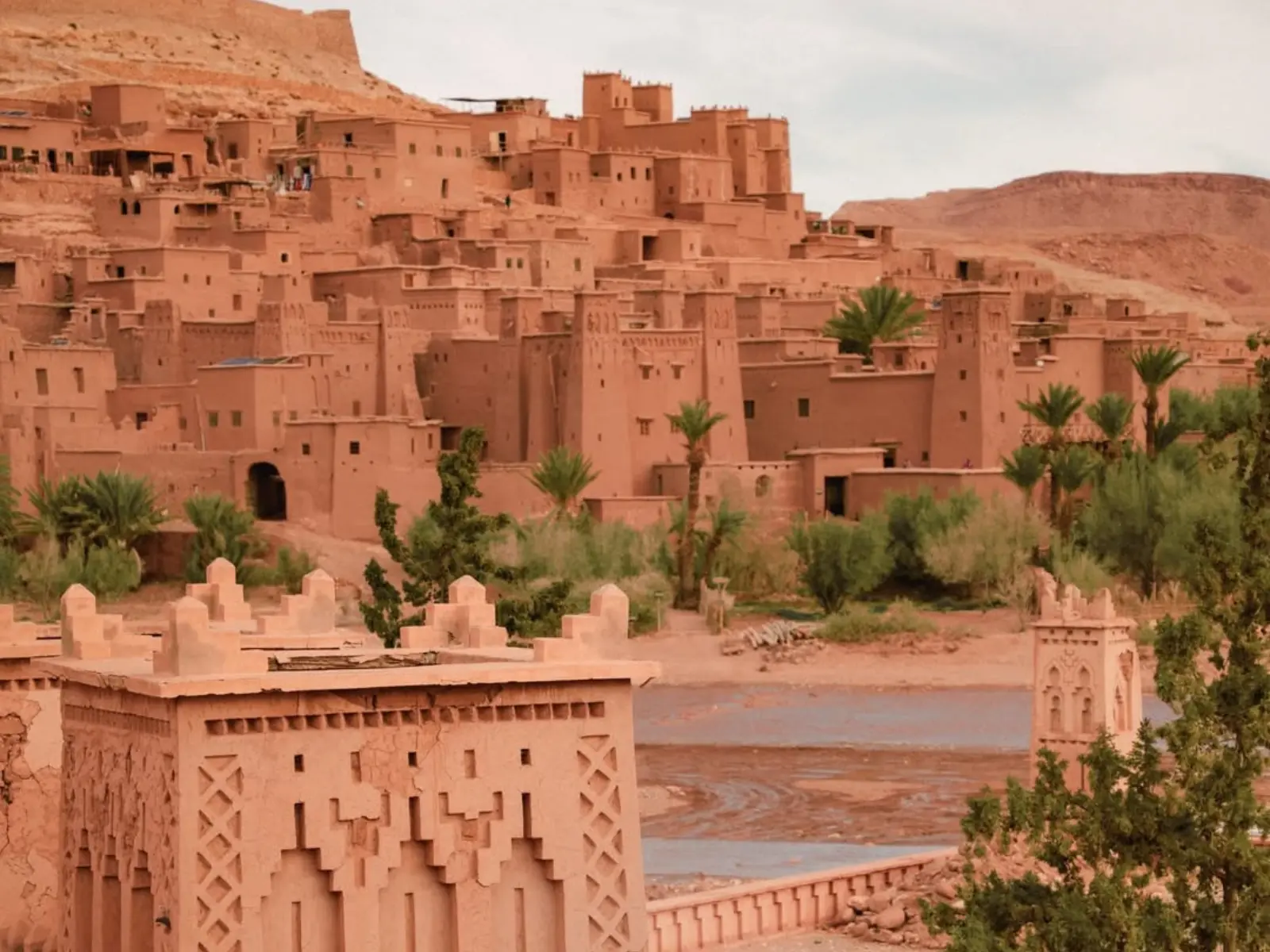
The kasbah of ait benhaddou is a ksar, or fortified settlement, made up of several kasbahs, family homes, and defensive towers built entirely from rammed earth — a mix of clay, straw, and sand known as pisé. Located in the Ouarzazate province of aït benhaddou morocco, it once served as a stop along the trans-Saharan trade route connecting Marrakech to sub-Saharan Africa.
Key facts about Aït Ben Haddou:
UNESCO recognized aït benhaddou, Morocco in 1987 as one of the best-preserved examples of pre-Saharan earthen architecture in the world. Because clay structures erode over time, the site requires ongoing restoration — a small number of local families still live within the walls and help maintain the historic buildings.
One of the top search questions about this site is its connection to Hollywood. Ait benhaddou gladiator scenes were filmed here in 2000 for Ridley Scott’s Oscar-winning film. The kasbah has also appeared in:
This film history has helped make benhaddou morocco and the nearby city of Ouarzazate (“Ouallywood”) a hub for international productions.
Most visitors reach ait ben haddou morocco by car or organized tour from Marrakech, crossing the Tizi n’Tichka pass through the High Atlas Mountains. The site is also commonly included as a stop on multi-day desert tours heading toward Merzouga or Zagora.
Getting there — quick facts:
Yes—it’s one of Morocco’s most iconic UNESCO sites and a common stop between Marrakech and the Sahara Desert.
Most visitors spend 1–2 hours walking through the site and climbing to the granary at the top.
Yes, a small number of families still live inside the historic walls, though most residents have moved to the newer village across the river.
Yes, though many travelers combine it with an overnight desert tour rather than doing a rushed round trip in one day.
Whether you’re drawn by the UNESCO history, the ait benhaddou gladiator connection, or simply the dramatic desert scenery, aït ben haddou remains one of the most rewarding stops in southern Morocco a living piece of history still standing, one repaired wall at a time.