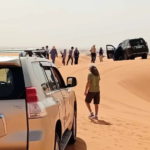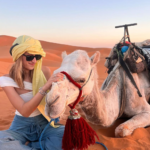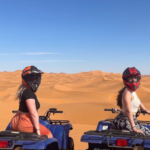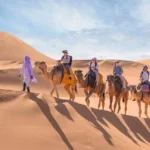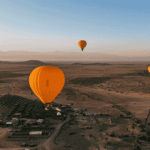

If you ask what the desert in Morocco is called, the short answer is the Sahara. But Morocco’s desert landscape is more varied than one name suggests. It includes towering golden dunes, black stone plains, palm-filled valleys, and dry lakebeds, and each has its own name and character.
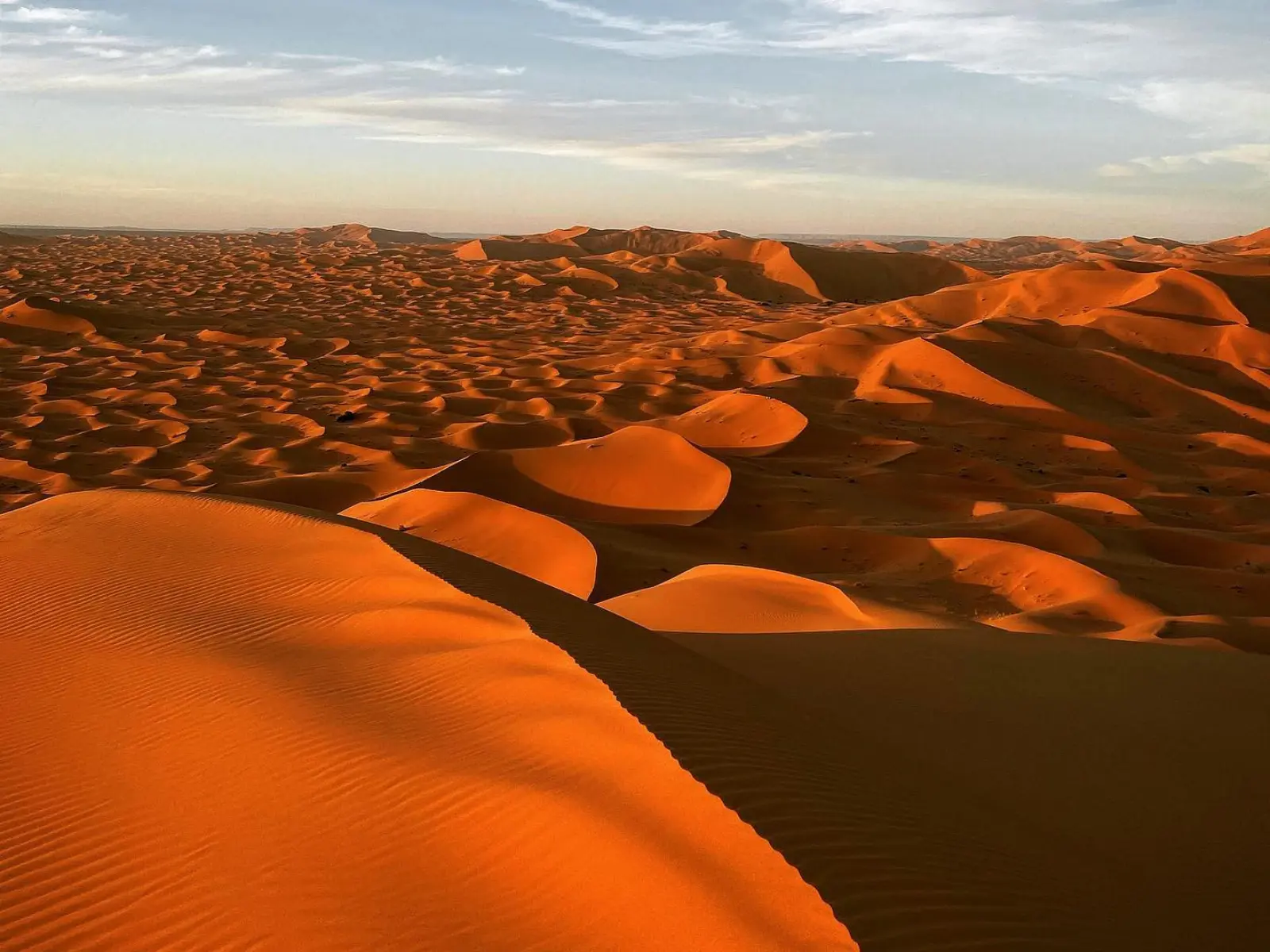
Yes, though only part of the country is. The Sahara stretches across North Africa, from the Atlantic Ocean to the Red Sea, and Morocco holds its northwestern edge. The Moroccan desert begins where the High Atlas Mountains fall away to the south and southeast, and it continues toward the Algerian border and down the Atlantic coast.
No. Many first-time visitors are surprised by this. Morocco has snow-capped mountains (the High Atlas peaks pass 4,000 meters), cedar forests, fertile farmland, and two very different coastlines, one Mediterranean and one Atlantic. Cities like Fes, Rabat, and Tangier have nothing desert-like about them. The Sahara covers the south and southeast, and it is a region you travel to, not the country’s defining landscape.
It depends on what you want.
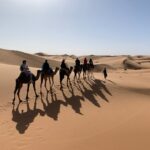
Erg Chebbi (Merzouga Desert) is considered the best by most travelers. It has the classic postcard dunes, easy camel-trek access, sunrise and sunset views, and a wide range of camps from simple to luxurious.
Erg Chigaga suits people who want solitude. It takes longer to reach, often by 4×4 across open terrain, but the reward is silence, very few other tourists, and some of the darkest night skies in North Africa.
Agafay is best if you are short on time and want a desert evening without a long journey.
The Agafay Desert is the closest, about 40 kilometers (roughly 45 minutes) from the city. It is rocky rather than sandy, with a stark, moon-like look and the Atlas Mountains on the horizon. It is popular for sunset dinners, camel rides, quad biking, and luxury desert camps.
If you want real sand dunes and take a desert tour from Marrakech, you need more time. Zagora is about 5 to 6 hours away by road, and Merzouga is about 9 to 10 hours. Most travelers break the trip with an overnight stop or take a 2 to 3 day tour through the Atlas Mountains.
Morocco has no single “desert city,” but a few places serve as gateways:
The Sahara is the largest hot desert on Earth, covering about 9 million square kilometers, roughly the size of the United States. It is known for:
Yes, but it helps to know what “real” means here. Erg Chebbi and Erg Chigaga are genuine Sahara sand seas, part of the same desert system that runs across the continent. Agafay is also a real desert environment, but it is a stone desert rather than a sand one, and it lies north of the Sahara’s core dune regions. Both are worth visiting, but only the ergs in the southeast give you the classic endless-dunes experience.
Some travelers expect nothing but sand, but the Sahara is mostly gravel plains, rocky plateaus, and dry riverbeds, and sand dunes make up only a fraction of it. Morocco is one of the most accessible places to see the sandy side.
Morocco’s desert is the Sahara, but “the desert” here means several very different places: the sculpted dunes of Erg Chebbi, the remote sands of Chigaga, the stony hills of Agafay, and the palm-lined Draa Valley between them. Choose by how much time you have and how wild you want it to feel, and you will find the right one.